
I have questions.
This is not a new thing, I am cursed to be the question asker, but this time I have a number, and they are all on the same subject, so instead of a social media post (or 15), a full article seemed tidiest.
On the 10th of September the government announced the long-awaited and unsurprising news that burning of vegetation on peat over 30cm deep was to be banned. There has been a consultation, a lot of noise from all sides of the debate and straight after a reshuffle the announcement is made. No burning on peat over 30cm deep without a licence from the 30th of September.
So far so normal. The many varied folk who use burning as a management tool have been expecting the practice to be further regulated for years, they may see the move as daft, or counter-productive, but nobody can say they weren’t expecting it. The people who believe controlled fire to be a hugely damaging practice celebrated and probably raised a glass to their successful campaigning. The NGOs on both sides made statements. DEFRA sent out a press release. So far so straightforward.
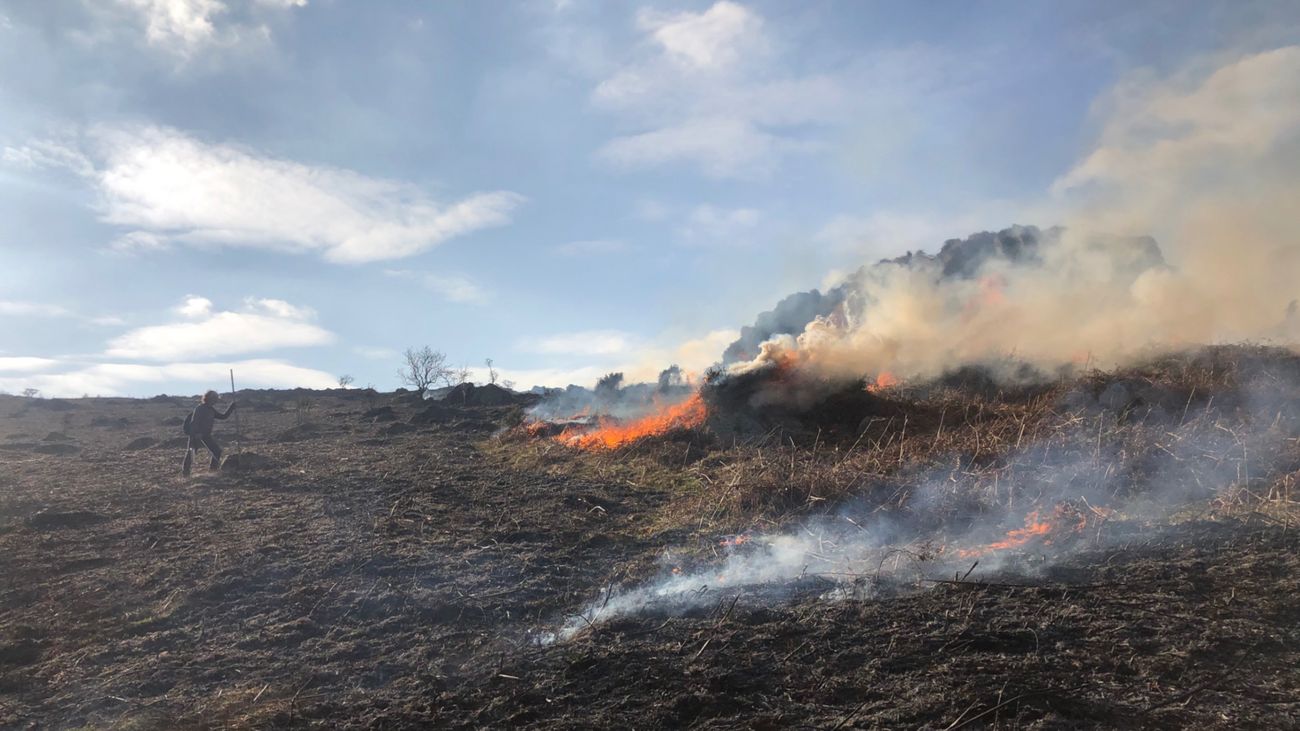
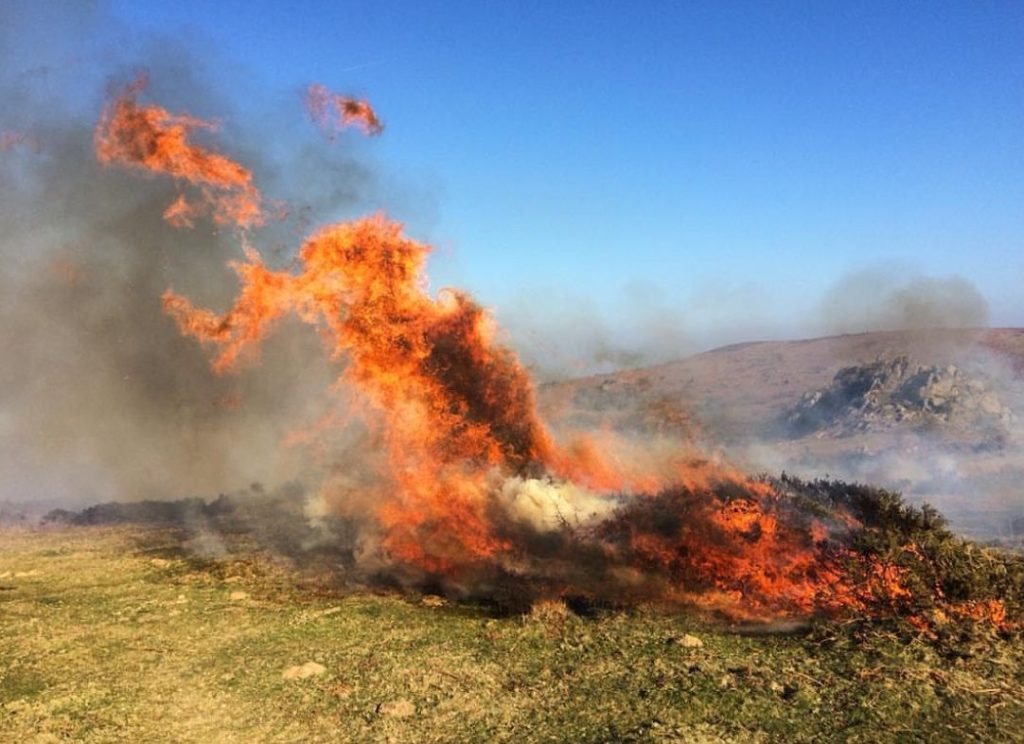
Now, before I start with my list of questions I must ‘confess’ that I have set fire to things. And I enjoyed it. Swaling, the practice on Dartmoor of burning gorse, grass and heather, along with bracken, is part of my life. I was taught to burn stuff by my mother, and I know it both works well and can be damaging. I have had long involved discussions with the Devon and Somerset Fire and Rescue Service wildfire officer and mapped fire breaks and wildfire risks across both my land and others. I have watched, twice, as huge fires have rolled across the hill between us and the nearest town, uncontrolled. I have a good friend who fights forest fires in California, and who despairs over our direction of travel.. Fire is an intrinsic part of my life; normal, frightening, useful and at times the hardest day’s work I’ve ever done. That said I can see that the world changes and sometimes we have to change with it, science moves on and rules do too. Controlled burns on the moors may be a thing of the past.
So I am asking these questions from the standpoint of ‘actually doing the work on the ground’, but not as a ‘scientist’ or ‘ecologist.’ I am also asking them because I am seriously worried that unintended consequences may be rolling towards us (along with a bureaucratic muddle).
Question 1 is basic. Or at least it should be… what is the definition of peat?
What is peat?’
This seems a daft question to be asking, but it matters because there are different definitions. According to the IUCN (International Union for Conservation of Nature) there is no set definition, but a broad consensus splits the definitions into an ecologist one or a geologist one, but neither are set in stone. Natural England seem to favour the ecologist’s definition, (20% organic matter), but that’s not ‘peat’ according to others who set the organic matter lower limit to 30% or even 50%. Confusingly some don’t focus on organic matter at all, instead look at water content, how it holds the water, if it can be rolled into a thin soil sausage or how the soil was formed.
So is the peat we are protecting peat or peaty soils, is it 50%+ organic matter or over 20%?
And is hidden peat (peat soil under another type of soil) included and if so at what depth? Is this ban only for surface peat?
Next – the size of peat deposit…
Peat turns up often in small pockets (I’m not thinking of the pockets of grubby children, more the small area around an old spring, possibly now dried up, or in a hollow now filled in). So, does size actually matter?
Small deposits of peat may not be that deep, but some are, and some are dry and isolated which makes them very difficult to find. Are people going to be fined for burning over a couple of metres of deep peat in an otherwise non peat landscape?
Next – the peat map of doom and its uses
In May Natural England, the government organisation that is in charge of such things, launched a brand new and exciting peat map of England. It was called the most detailed peat map ever. It’s not. It was launched with a fancy video of the map showing Malham Tarn and its limestone pavements as deep peat. It’s got deep flaws in its modelling and basically is wrong to some degree or other at every level, but Natural England stands by it as ‘fit for purpose’.
Will anyone look at it, think it’s correct and waste time and money investigating a burn that’s on a non-peat soil? Will others think wrongly that an area is peat-free when it in fact has deposits of peat? Will people waste whole days doing peat surveys amid deep gorse or bracken just in case having looked at it? And if so will Natural England be liable for mistakes made when using the map?
And while I am on the subject – where is the data from?
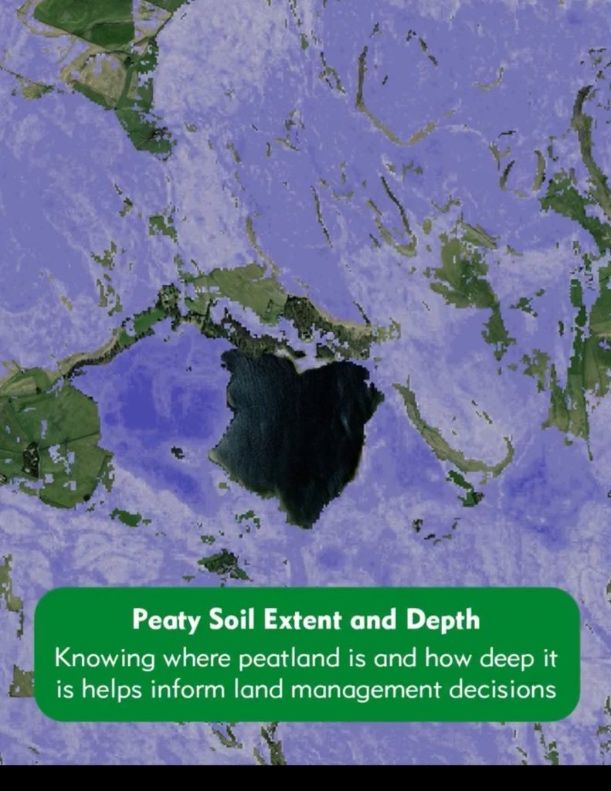
The press release of the ban had a few facts and figures in it. Were they taken from data supplied by Natural England, stemming from the peat map? The ‘80% of peat is degraded’ soundbite, and the extent of now protected peat, (676,628 hectares of deep peat according to the Guardian newspaper), are they coming from the terrible mapping, or from elsewhere? I want to know because if they stem from the awful map there may easily not be that much peat to protect (or sell carbon credits for) and the government’s GHG figures may be all out of whack.
My next questions are more practical – what about wildfires?
If there is a wildfire and if a back-burn is needed to control it, will the fire service and anyone helping them be allowed to light one without a licence? I presume so, surely the fire service won’t need to contact DEFRA out-of-hours service to ask permission to fight fire with fire, but just because I think it would be madness doesn’t mean it’s not policy. How do we find out?
And that brings me to a liability… if a wildfire happens on deep peat, like the Cut Hill fire this year on Dartmoor, who’s liable? Who’s going to get fined? You would think the liability lies with the landowner, but it could be with whoever (if human and traceable) started the wildfire, or with no one. Do we need insurance against others being daft?
Next is – should Everyone doing any burn Always survey for peat?
If the peat map is so bad, and the penalties are strong, should we all be advised to record robust evidence of surveys for peat? And if so, who pays for the training and time? (I guess the landowners?) This added layer may just be another bit of hill work and paperwork we need to do, but it may mean people don’t burn in areas that need it, areas that would benefit it from a reduced wildfire risk or maybe places with a SSSI designation and Natural England advice to burn. Is there government advice about this other than their advice about getting a licence for deep peat burns?
Still another question – what’s the rewetting plan?
We are told often that peat should be wet, and that an awful lot of it is not, it makes wildfires less severe and generally is a good thing, but who exactly is going to pay, and when, for the rewetting of the deep peat? On Dartmoor there are large projects fixing damaged peat, but it’s expensive. We have the usual labour costs, and machinery, but also the clearing of army detritus, the kind that can go pop if handled badly. This adds up and slows down the work. Even on land that’s not ‘explosive’ archaeology or basic access issues can hold things up, as can finding funding and waiting for government departments to talk to each other. What is the government budget for this work and how is it accessed by all? Or is it a case of natural capital coming to the rescue?
Added to the question of where the cash is coming from is what happens if the climate changes to the degree that peat can’t be rewetted? Dry summers followed by drenching winters may easily mean we just can’t hold the water where we need it, if that happens along with the higher fuel load may result in huge fires. This also means that carbon markets money may have to be paid back. So, what is the plan?
And finally – not burned but bagged?
There has been talk of banning peat sales for garden uses for years. Pressure put on the gardening industry and reports commissioned, sales have dropped yet peat is still sold in plastic bags across the country and I fear that as soon as the pressure is off the practice will creep back without regulations in place to stop it. Surely if it’s this vital to ecology, to the climate, to the hydrology of the land that should have been the first announcement. The fact that it is not leaves the question – is this burning ban just virtue signalling? Playing to the crowd while letting certain industries off the hook?
I think that’s it for now, although I am sure I have missed a point or two.
I will now go skip about in some fairly dense gorse to check for peat… wish me luck (and thorn proof trousers!)
